
Poverty in China: The Reality Behind the Propaganda
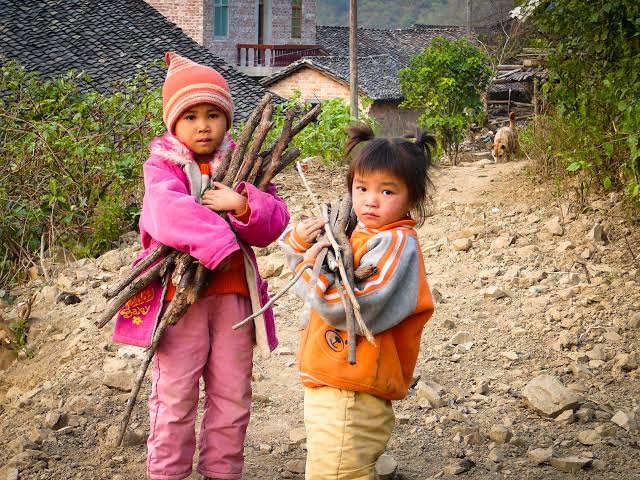
In recent months, videos posted by Indian social media users showing poor neighborhoods, unemployed workers, struggling migrant families, and underdeveloped rural communities in China have sparked intense debate online. For years, China has been projected internationally as an unstoppable economic success story. Yet these videos have raised uncomfortable questions: If China has truly eliminated poverty, why do so many images of hardship continue to emerge from different parts of the country?
The Chinese government announced in 2021 that it had eradicated "extreme poverty" nationwide. However, the declaration did not mean that poverty, inequality, or economic deprivation had disappeared. Rather, it meant that China had achieved a specific domestic poverty threshold. Large disparities continue to exist between wealthy coastal cities and vast rural regions, particularly in areas inhabited by ethnic minorities such as Tibet and Xinjiang.
The Hidden Side of China's Economic Miracle
China's economic rise has undoubtedly transformed the country, but official narratives often focus exclusively on success stories while minimizing ongoing social and economic problems. Strict media controls, censorship, and extensive state-directed publicity campaigns have enabled Beijing to shape both domestic and international perceptions of development.
While gleaming skyscrapers in Shanghai, Shenzhen, and Beijing are frequently showcased, less attention is given to regions where poverty, unemployment, and dependence on government subsidies remain widespread.
China's own official statistics previously identified Tibet as the country's poorest provincial-level region. As late as 2015, more than one-quarter of Tibet's population was still living below the official poverty line, despite decades of intensive state investment. According to Chinese government figures, approximately 628,000 Tibetans were classified as having been lifted out of poverty by 2019. Even Chinese state sources acknowledged that Tibet remained one of the country's most impoverished regions before these campaigns.
Critics argue that Beijing's poverty-alleviation narrative often obscures deeper structural issues. Many development programs have relied heavily on government transfers and subsidies rather than the creation of self-sustaining local economies. In Tibet, enormous state spending has improved infrastructure and living standards in many areas, but it has also increased dependence on Beijing while accelerating demographic, cultural, and economic integration into the Chinese state. Reports from international organizations, researchers, and human-rights groups have raised concerns that development policies are frequently linked with assimilation efforts targeting Tibetan identity.
Tibet: Poverty, Dependency, and Assimilation
The Tibetan Plateau presents unique geographical challenges. Remote settlements, harsh climates, limited agricultural capacity, and difficult transportation routes have historically contributed to economic hardship.
However, critics argue that Beijing's approach to poverty reduction in Tibet has often prioritized political control alongside economic development. International observers have pointed to large-scale relocation schemes, labor-transfer programs, and boarding-school systems that separate children from traditional community environments. Supporters describe these policies as modernization and poverty reduction; critics see them as tools of assimilation.
A recurring criticism is that the Chinese state highlights new roads, housing projects, and GDP growth while avoiding discussion of whether Tibetans themselves retain meaningful control over economic development, land use, cultural institutions, and employment opportunities.
Xinjiang: Poverty Alleviation or Social Engineering?
Xinjiang has long been one of China's poorest regions despite its strategic importance and vast natural resources. Academic research shows that southern Xinjiang, including Kashgar, Hotan, Aksu, and Kizilsu, has been officially designated among China's most impoverished areas requiring special poverty-alleviation measures.
The controversy surrounding poverty reduction in Xinjiang goes beyond economics. Research examining labor-transfer programs has documented how poverty alleviation became increasingly linked to state security objectives. Scholars have argued that from 2014 onward, Uyghur underemployment was framed not only as an economic problem but also as an issue of political stability and national security. Between 2017 and 2019, labor-transfer programs expanded dramatically alongside mass internment campaigns and intensified state control.
Chinese authorities describe these programs as employment initiatives designed to increase incomes and reduce poverty. Critics argue that the programs often operate in an environment where genuine consent is difficult to assess due to pervasive surveillance, political pressure, and restrictions on civil liberties.
This has led many observers to question whether poverty alleviation in Xinjiang should be viewed purely as an economic program or as part of a broader strategy of social transformation and political control.
Why the Debate Is Growing
The recent wave of videos shared by Indian content creators has contributed to a broader reassessment of China's image. For years, social media feeds around the world were dominated by videos showcasing China's high-speed rail, futuristic cities, and technological achievements. Increasingly, however, users are posting footage of struggling workers, empty apartment developments, declining industrial towns, and rural poverty.
Such videos should not automatically be treated as representative of all of China. Yet they have highlighted an important reality: the country's economic story is far more complex than official propaganda often suggests.
China remains an economic powerhouse, but significant pockets of poverty and inequality continue to exist. In regions such as Tibet and Xinjiang, debates about poverty cannot be separated from questions of political control, cultural rights, and state-directed social engineering.
Conclusion
China's poverty-reduction campaign has undoubtedly changed millions of lives. Yet the claim that poverty has been completely defeated masks a more complicated reality. In Tibet and Xinjiang, poverty alleviation has frequently been accompanied by policies that critics view as instruments of assimilation, surveillance, and political control. The result is a development model that may improve material conditions while simultaneously raising profound questions about freedom, identity, and self-determination.
As more videos and testimonies circulate online, the discussion is shifting from whether China reduced poverty to how it reduced poverty, who benefited most, and what social and cultural costs accompanied the process.