Golog Loses Three More Tibetan Schools as China Erases Tibetan-Medium Education
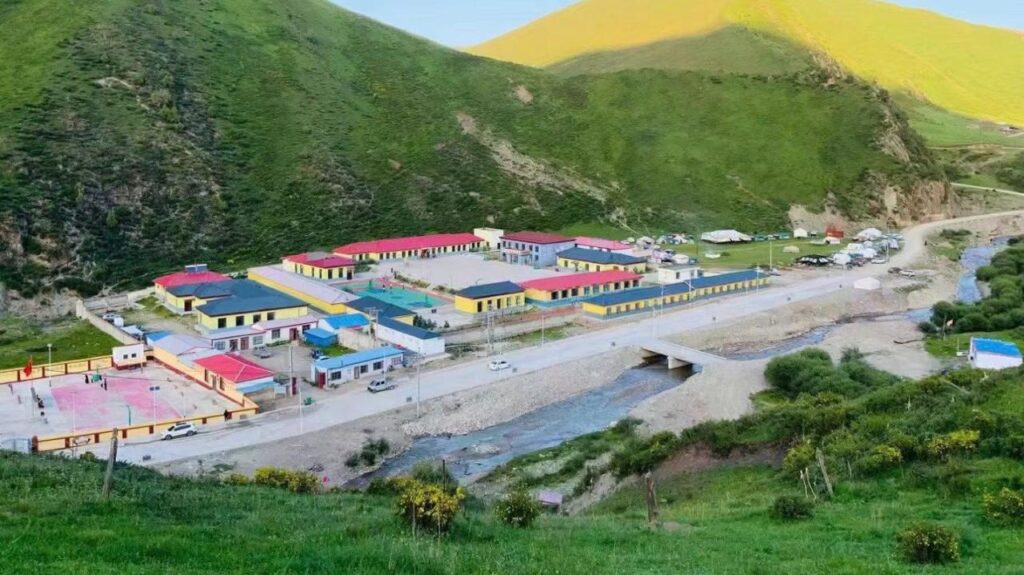
An orphanage that sheltered 300 children, an award-winning school for nomad girls and a crowdfunded village school have all been closed in the space of a few weeks.
Chinese authorities have shut down at least three privately run Tibetan schools in Golog Tibetan Autonomous Prefecture since late August 2026, according to sources in the region cited by the Central Tibetan Administration’s Department of Information and International Relations (DIIR). All three were in Machen (Maqin) County. Together they taught well over a thousand Tibetan children in their own language. Those children are now being moved into state-run, Mandarin-medium institutions.
Sources say the closures are part of a deliberate drive to bring Tibetan children into government schools, where assimilation and political “re-education” are easier to enforce. Because phone and internet communications in the region are tightly monitored, news of each closure has taken weeks to reach the outside world.
A home for orphans, closed
On 2 September, authorities closed the Golog Tadrak Orphan School in Tabo Village. Founded in 2005 with support from the late Dr. Tawu Lobsang Palden and his wife, who lived in Germany, the school was both a home and a classroom for more than 300 children who had lost their parents or come from broken families. For these children, the school was their family, and Tibetan was the language of that family.
An award-winning school for nomad girls
Days earlier, on 27 August, the Ra-Gya Jigme Gyaltsen Grassland Girls’ School (also known as Gangjong Tsathang Girls’ School) was forced to close. Established on 15 October 2005, it served around 800 girls from nomadic herding families across all three traditional Tibetan regions, Ü-Tsang, Kham and Amdo, with about 100 teachers and staff.
Its curriculum combined Tibetan language, Buddhist philosophy, science and traditional medicine with handicrafts, thangka painting and astrology. It was the only school of its kind in the area, won numerous awards, and produced graduates who are now respected figures in Tibetan society.
This is the second blow to the Ra-Gya community in two years. In 2024, authorities closed the Ra-Gya Gangjong Sherig Norbu Lobling School, widely considered one of the best schools anywhere in Tibet.
A village punished for teaching in Tibetan
At the end of August, the Jasak village school in Ra-Gya Town was closed after officials verbally told staff that teaching in Tibetan was unacceptable. They were instructed to teach only in the “national common language”, meaning Mandarin Chinese. Villagers had founded the school themselves and kept it alive through crowdfunding so their children would grow up literate in Tibetan. Its roughly 300 students were sent to government boarding schools.
Not isolated incidents
These closures continue a pattern that has been building in Golog for years:
- July 2021: Sengdruk Taktse School closed, followed by orders shutting seven more private schools in Darlag, Machen, Gade and Chikdril counties.
- 2024: Ra-Gya Gangjong Sherig Norbu Lobling School closed.
- 24 June 2026: Hungkar Dorje Vocational High School, which had taught Tibetan language and culture since 2008, permanently shut.
- August–September 2026: Tadrak Orphan School, Ra-Gya Girls’ School and Jasak village school closed.
Each closure removes another independent space where Tibetan children can learn in their mother tongue.
What international law says
In 2023, UN human rights experts warned that China’s colonial-style boarding school system already held around one million Tibetan children and described it as a policy of “forced assimilation.” The Golog closures push more children into that system.
They also conflict with China’s own treaty obligations and laws:
- Convention on the Rights of the Child, Articles 29 and 30: minority children’s right to their own language and to education respecting their cultural identity. Article 20 requires continuity in the cultural and linguistic upbringing of children deprived of their families, which the orphanage closure directly violates.
- International Covenant on Economic, Social and Cultural Rights, Article 13: the freedom to establish and choose schools.
- CEDAW and CERD: equal education for girls and freedom from discrimination in education and cultural life.
- China’s Constitution, Article 4: every nationality’s freedom to use and develop its own language.
- Regional Ethnic Autonomy Law, Article 37: schools serving minority students should teach in their languages where conditions permit.
Beijing’s justification doesn’t hold
Chinese officials argue that boarding schools and Mandarin instruction raise standards in remote areas, and state media cite teacher shortages to explain why Golog students are sent to board in Xining, some 480 km from home. But these were not failing schools. They were respected, well-run institutions built by Tibetan communities themselves. Closing them doesn’t fill an educational gap; it creates one.
The real cost is generational. Children separated from their language lose the ability to speak with their parents and grandparents, and lose access to Tibet’s literary, religious and medical heritage. That is how an identity is dismantled, one classroom at a time.
What you can do
- Share this story and tag your elected representatives.
- Urge your government to raise Tibetan school closures and the boarding school system at the UN Human Rights Council and in bilateral dialogue with China.
- Support Tibetan-language learning in exile communities.
Source: Human Rights Desk, Tibet Advocacy Section, Department of Information and International Relations (DIIR), Central Tibetan Administration, 17 October 2026.