Tibet Cultural Identity Is Being Erased Through Education and the World Must Respond
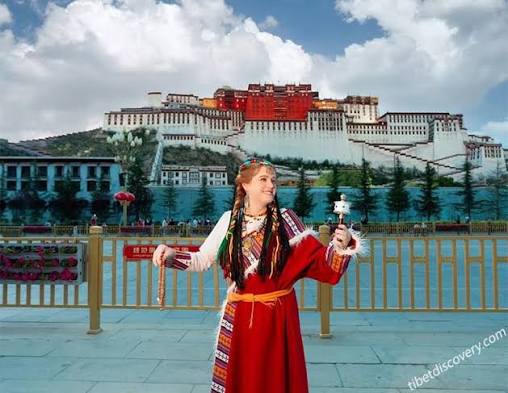
A new generation of Tibetan children is being raised in schools that teach them who they are not. This is what systematic cultural erasure looks like in the modern era.
The struggle for Tibet is no longer fought only with soldiers or legislation. Today, it is being waged inside classrooms, through textbooks, and across boarding school dormitories where Tibetan children sleep hundreds of miles from their families. What is happening is not accidental. It is methodical, and it has a name: cultural erasure.
Across the Tibetan Plateau, educational policies implemented under the Chinese Communist Party have systematically reshaped school curricula to promote a Han-centric version of history, identity, and national belonging. Tibetan history, religion, language, and folklore are being pushed to the margins. In their place, students receive a simplified national story in which Tibet appears primarily as a region awaiting liberation, Beijing's preferred term for the PLA's 1950 military entry into eastern Tibet.
This is not education. It is rewriting.
A Civilisation Being Taught Out of Existence
Tibetan Buddhism has shaped this civilisation for centuries. It is woven into its philosophy, literature, architecture, and daily life. Yet school materials increasingly treat religion as secondary or simply omit it. Historical figures central to Tibetan spiritual and cultural heritage receive diminishing attention. Political loyalty and state ideology receive more. The result is a curriculum that teaches Tibetan children about everything except what it means to be Tibetan.
The language dimension is equally urgent. Research by human rights organisations documents that roughly one million Tibetan children have been placed in state-run boarding schools that operate primarily in Mandarin and restrict the use of Tibetan in daily life. These children are separated from their families during the years when language and cultural identity are formed most deeply. Private Tibetan-language schools have been systematically closed. Teachers associated with independent Tibetan-language education have in several cases been detained.
Then, in December 2025, Beijing made it official. A revised National Common Language Law explicitly removed earlier provisions allowing minority languages to serve as primary mediums of instruction, mandating Mandarin as the fundamental teaching language across all schools. What had been a sustained policy pressure became a legal requirement. A generation of young Tibetans is now being shaped, by law, to grow up at a distance from their own heritage.
The World Has Seen This Before
This pattern is not without precedent. Canada, Australia, and the United States all implemented residential and boarding school systems designed to suppress indigenous languages and replace native identities with a dominant national culture. Those policies are now widely recognised as profoundly harmful. Governments in each of those countries have since issued formal acknowledgements of the damage caused.
The parallel with Tibet is not incidental. In each case, education became the mechanism for severing cultural continuity. Children were removed from their communities, their languages restricted, their histories reframed. The international community now broadly accepts that preserving indigenous languages, traditions, and historical narratives is essential to human dignity. Those same principles must apply to Tibet, not selectively, but consistently.
What Preservation Actually Requires
Protecting Tibetan heritage cannot mean simply maintaining monasteries or archiving artefacts. A civilisation survives when its history, values, and language are passed from one generation to the next. That transmission happens in schools. When educational materials fail to reflect Tibetan perspectives, students lose access to the intellectual and cultural foundations of their own society.
Meaningful preservation begins with reinstating Tibetan history, religion, literature, and culture as core subjects within regional education, taught in the Tibetan language. It requires curriculum development that genuinely involves Tibetan educators, historians, linguists, and community leaders. Cultural preservation achieved through centrally imposed content is not preservation; it is a managed performance of it.
There is also a clear role for international bodies. UNESCO and other cultural preservation organisations should formally examine the growing threat to Tibetan educational heritage. The legislative codification of Mandarin-only instruction, the closure of Tibetan-language schools, and the mass expansion of residential schooling raise urgent and measurable concerns about the long-term survival of Tibet's intellectual traditions. Formal recognition of Tibetan educational heritage as being under active threat would mobilise global attention to an issue that is, at its core, about the right of a people to transmit who they are.
The Stakes Are Generational
Tibet is not merely a geographic designation within a modern state. It is a living civilisation with its own language, history, religious traditions, and cultural memory accumulated across centuries. What is at risk today is not a collection of customs or a set of practices. It is the capacity of future generations of Tibetans to know themselves, to understand where they come from, what their ancestors built, and why their heritage matters.
Rejecting the rewriting of Tibetan history is not nostalgia. It is a recognition that the deliberate erasure of a peoples identity through their childrens education is one of the most consequential forms of harm a state can inflict. It is also, as history has shown repeatedly, one of the hardest to undo.
The world has had this conversation before. The question now is whether it will apply the same moral clarity to Tibet that it eventually and belatedly applied elsewhere.